
Does Your Paving Stone Driveway Need Repair?
5 Signs Your Paving Stone Driveway Needs a Professional Repair
![[HERO] 5 Signs Your Paving Stone Driveway Needs a Professional Repair](https://cdn.marblism.com/S3ahxKFy3eZ.webp)
Let's be honest, Winnipeg's weather isn't exactly gentle on our driveways. Between the freeze-thaw cycles that feel like they happen weekly in spring, the weight of snow removal equipment all winter, and those surprise -40°C mornings, your paving stone driveway takes a serious beating year after year.
The thing is, there's a difference between a driveway that's just "showing its age" and one that's actually crying out for professional help. Sometimes those little cracks or slight shifts seem harmless, until they're not. And by then, what could've been a simple repair has turned into a much bigger (and pricier) problem.
So how do you know when it's time to call in the pros? Here are five telltale signs that your paving stone driveway has crossed the line from "weathered character" to "needs some serious TLC."
1. Cracked or Chipped Pavers
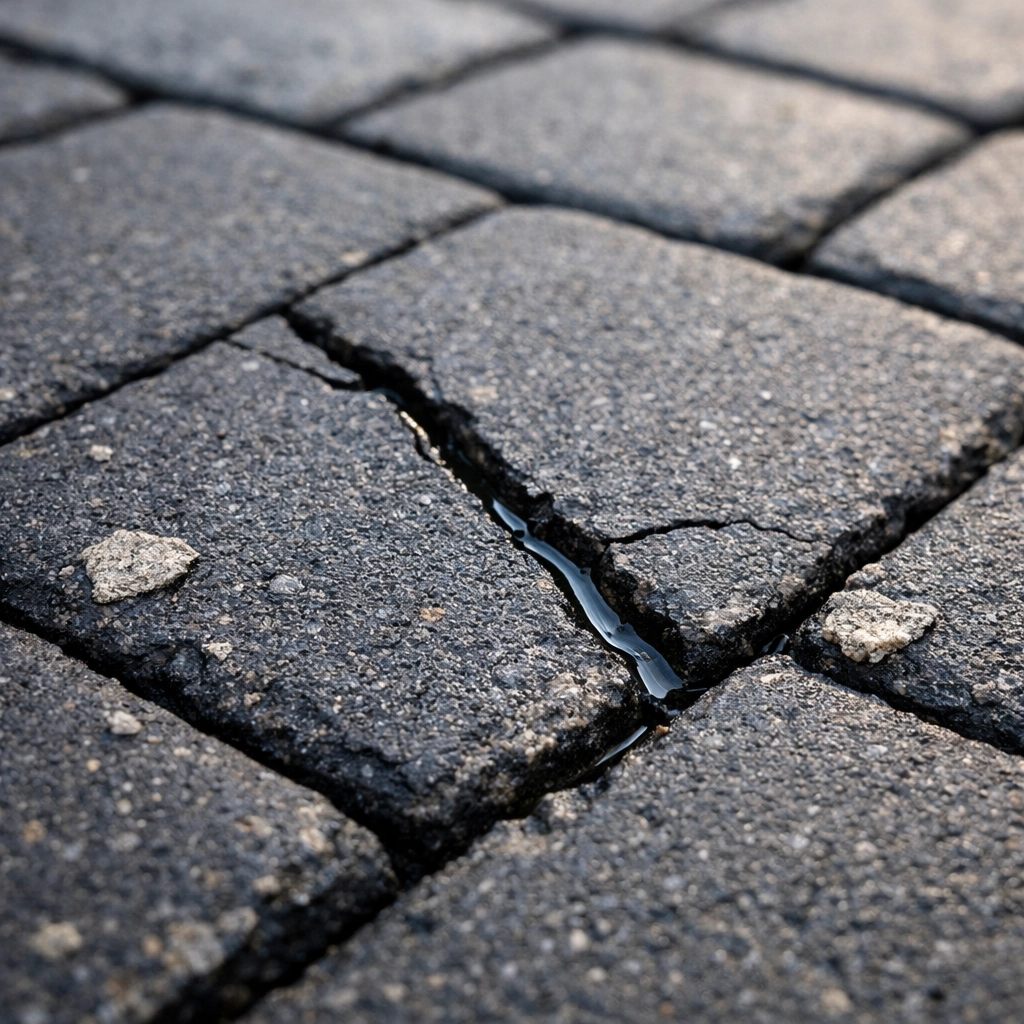
You're walking to your car one morning and notice a crack running through one of your pavers. No big deal, right? Well... maybe.
A single cracked paver isn't the end of the world, but it's definitely a warning sign. Here's what happens: water seeps into that crack, settles underneath the paver, and when our lovely Winnipeg winter hits and temperatures drop, that water freezes and expands. This creates even more pressure, making the crack worse and potentially damaging the surrounding pavers.
The good news? One of the best things about paving stones versus poured concrete is that you can replace individual damaged pavers without tearing up your entire driveway. That’s exactly what our paving stone repair service is built for. But you've got to catch it early.
When to worry: If you're seeing multiple cracked or chipped pavers, or if those cracks are getting noticeably wider, it's time to call in the professionals. These issues rarely get better on their own, they only get worse, especially with our dramatic seasonal changes.
2. Uneven or Sunken Sections (Hello, Frost Heave!)
If you've lived in Winnipeg for more than one winter, you know all about frost heave. It's that lovely phenomenon where the ground beneath your driveway freezes, expands, and literally pushes sections upward. Then when spring hits, everything thaws, the ground settles, and you're left with uneven, sunken areas.
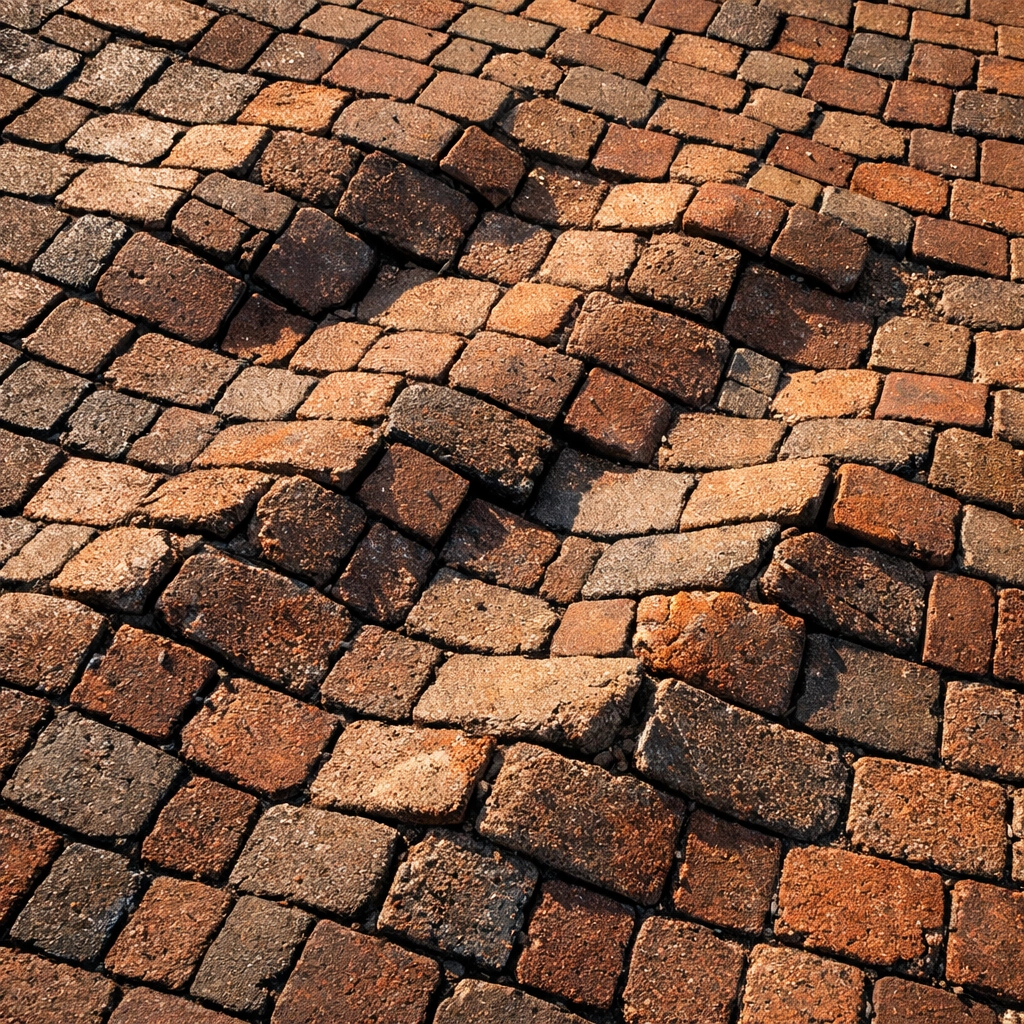
When your driveway starts looking like a miniature skateboard park: complete with dips, bumps, and uneven transitions: that's your base material failing. The compacted gravel and sand that should be providing a stable foundation has shifted, eroded, or been compromised by water infiltration.
Why it matters: Uneven pavers aren't just an eyesore. They're a tripping hazard, they can damage your vehicle's suspension over time, and they make snow removal way more difficult than it needs to be. Plus, those low spots become perfect little pools for water to collect (which leads us to our next sign...).
You might be tempted to just add some extra sand underneath the sunken pavers and call it a day, but that's like putting a band-aid on a broken bone. Professional repair means addressing the base structure properly: something we take seriously across our services by exceeding ICPI (Interlocking Concrete Pavement Institute) standards in every project.
3. Pooling Water or Drainage Problems
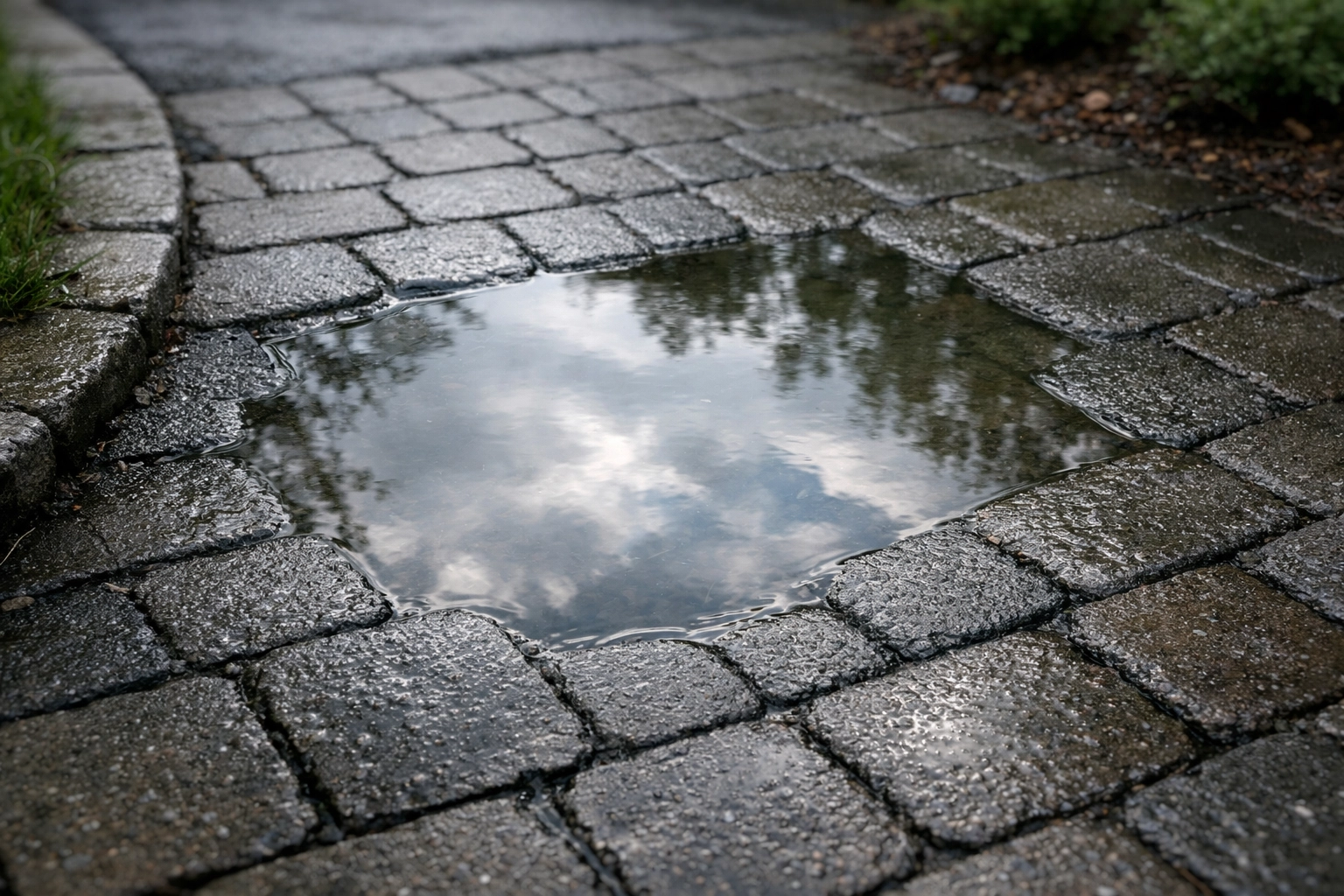
Standing water on your driveway after a rainstorm or during spring melt isn't just annoying: it's a serious red flag.
Your driveway should have been designed with proper drainage in mind, with a slight slope that directs water away from the surface and away from your home's foundation. When water starts pooling in low spots or along the edges, it means something has gone wrong with that drainage system.
The domino effect: Pooling water leads to erosion of the base material beneath your pavers. That erosion causes more settling and shifting. More settling creates deeper low spots. Deeper low spots collect more water. You see where this is going, right?
In Winnipeg, where we deal with significant snowmelt every spring, proper drainage isn't optional: it's essential. Water that sits on your driveway will work its way underneath, and when it freezes, it'll cause even more damage through frost heave and base failure.
If you're noticing consistent puddles in the same spots, or if water seems to be flowing toward your garage or foundation instead of away from it, you need professional assessment and repair. This isn't a DIY fix: it requires understanding proper grading, base preparation, and potentially reinstalling sections of your driveway with the correct slope (which is a big part of what we do with paving stone repair).
4. Disappearing or Deteriorating Joint Sand
Look down between your pavers. See that sand in the joints? It's doing way more than you think.
Joint sand (or polymeric sand, which is even better) locks your pavers together, prevents them from shifting, stops weed growth, and keeps insects from burrowing underneath. When that sand starts eroding away, washing out, or turning dark and deteriorated, your pavers lose their stability.
What causes it: Heavy rain, power washing without proper precautions, and the constant freeze-thaw cycle all contribute to joint sand deterioration. Once the sand is gone, your pavers can shift more easily, weeds start growing in the gaps, and ants might decide your driveway base looks like prime real estate.
You might notice this problem gradually: the gaps between pavers getting wider, sand collecting in your garage or washing down your driveway, or plants starting to grow between stones. While you can add more joint sand yourself, if you're constantly re-filling the joints or if large sections have lost their sand entirely, there's likely a bigger issue at play.
Professional restoration involves properly cleaning the joints, potentially re-leveling shifted pavers, and applying high-quality polymeric sand that'll hold up better to our Winnipeg weather conditions. If you want a hand, our paving stone repair team can take a look and recommend the right fix.
5. Widespread Shifting, Separation, or Edge Failure
This is the sign that says "we're past the point of simple fixes." When multiple pavers across your driveway are shifting, separating from each other, or if the edges of your driveway are starting to fail and spread outward, you're looking at significant structural problems.
Common causes in Winnipeg:
- Heavy vehicles (looking at you, snowplow trucks) putting pressure on poorly-supported edges
- Base material that wasn't properly compacted during installation
- Edge restraints that have failed or were never properly installed
- Years of freeze-thaw cycles without proper maintenance
When pavers shift and separate, they're no longer working together as a unified surface. Instead, each stone is taking the full brunt of vehicle weight and weather conditions individually: which they're not designed to do. This accelerates damage and can quickly turn your driveway from "needs repair" to "needs replacement."
Professional repair for widespread shifting usually means removing the affected pavers, addressing the base issues, ensuring proper edge restraints are in place, and reinstalling everything to manufacturer specifications. If the damage is extensive, it can also be a good time to look at a full paving stone driveway rebuild instead of patching the same areas over and over. At The Pavingstone Pros, we back this kind of work with a 3-year warranty because we know that when it's done right, it'll hold up to whatever Winnipeg throws at it.
Why Professional Repair Actually Matters
Look, we get it: watching YouTube tutorials and tackling home projects yourself can be really satisfying. But when it comes to paving stone repair, especially with the challenges of Winnipeg's climate, there's a lot that can go wrong if you don't have the experience and proper materials.
Professional contractors who specialize in paving stones (not just any general landscaper) understand:
- Proper base preparation that accounts for frost depth and drainage needs
- ICPI installation standards that ensure long-term durability
- Material selection that's appropriate for our climate
- Edge restraint systems that prevent spreading and shifting
- Grading and drainage that directs water away from problem areas
When you work with experienced professionals, you're not just getting a repair: you're getting a solution that'll last. That's why we exceed ICPI standards on every project and back our work with a solid warranty.
Plus, catching issues early and getting them properly repaired usually costs way less than waiting until you need a complete driveway replacement. Think of professional repair as an investment in protecting your bigger investment: your home.
Don't Wait Until Spring
If you're reading this and thinking "yep, my driveway has at least two of these issues," don't wait. While the repair work itself might need to happen in warmer weather, getting on a contractor's schedule early is always smart.
At The Pavingstone Pros, we've seen it all: from minor repairs to complete restorations. Whether you need targeted paving stone repair or you're thinking about a brand-new paving stone driveway, we can assess your driveway, give you an honest opinion about what needs to be done, and create a plan that makes sense for your budget and timeline.
Your driveway is one of the first things people see when they visit your home, and more importantly, it's a significant functional investment. Don't let small problems become big headaches.
Ready to get your driveway back in shape? Get in touch with us for a free assessment. We'll walk you through exactly what's going on, what your options are, and how we can help restore your driveway to the beautiful, durable surface it should be: backed by our 3-year warranty and exceeding ICPI standards every step of the way.
Because here in Winnipeg, if your driveway can survive our winters, it can survive anything: but only if it's built and maintained the right way.